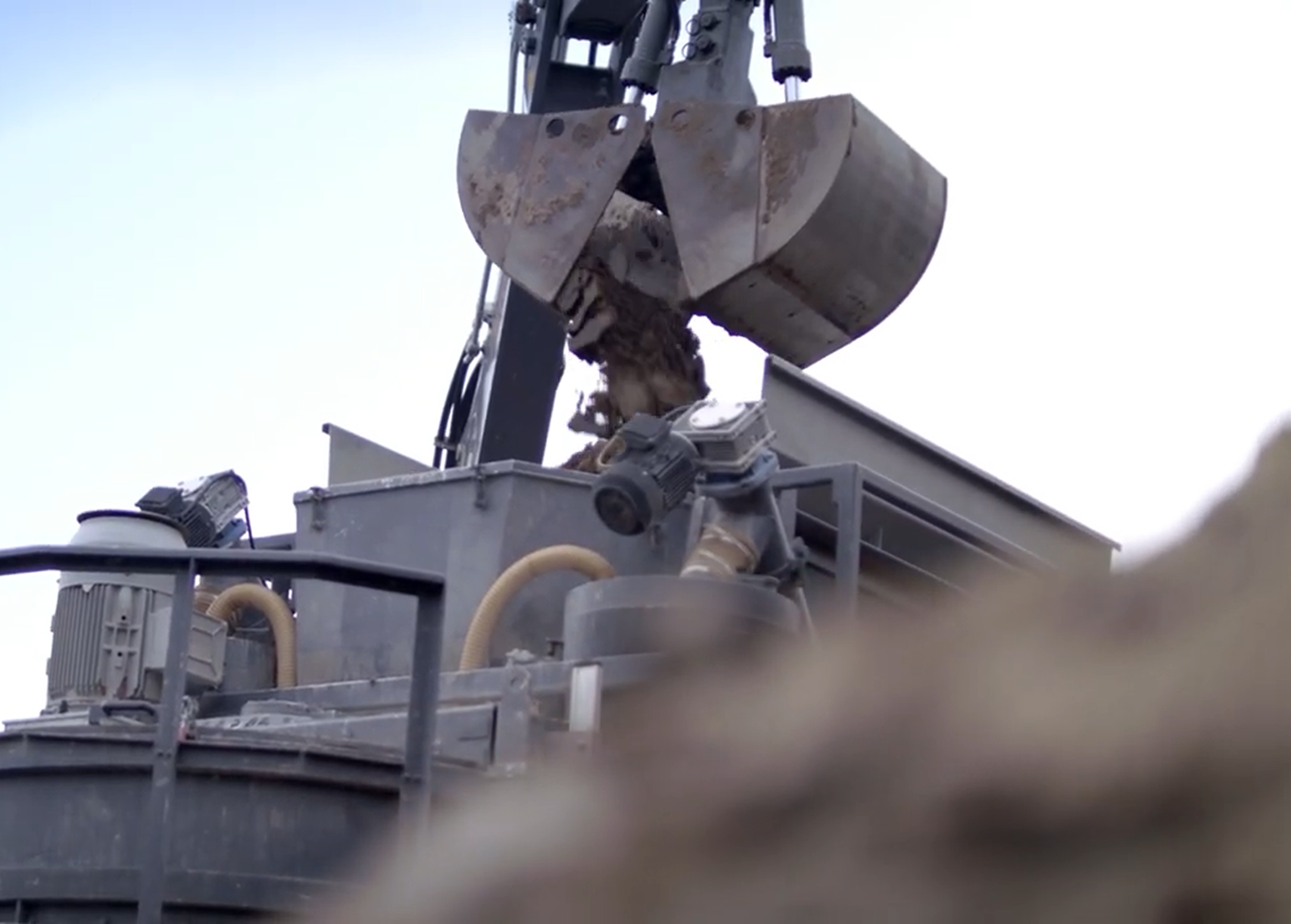
Liquid soil is a flowable building material that consists of treated soil, water and binding agents. It is being used more and more frequently, particularly in civil engineering and pipeline construction — as an alternative to conventional backfilling with sand or gravel. After installation, the liquid soil solidifies in a controlled manner without the need for mechanical compaction.
But is liquid soil the better solution in any case? In the following, we highlight the most important advantages and disadvantages.
.png)
Liquid soil is self-compacting. This means that no heavy compaction device is required. This saves time, personnel and costs — particularly on tight construction sites in inner cities or ditches.
The binder (liquid soil compound) can bind pollutants in the original soil, which allows it to be reinstalled on site.
Instead of removing soil and procuring new filler, the existing material can be processed and reused directly. This saves transportation, reduces emissions and lowers disposal costs.
Thanks to the homogeneous and seamless filling, there are significantly fewer refills compared to traditional filling. This is particularly relevant for sensitive surfaces such as sidewalks or roads.
Liquid soil reduces the need for primary raw materials, transport routes and CO₂ emissions. By using recycled materials and local processing, the ecological footprint is significantly smaller.
Depending on the recipe, liquid soil can be removed again later — for example for repairs or rework on pipes. This offers a high level of flexibility that conventional materials do not offer.
Thanks to its flowable properties, liquid soil can fill even the tightest work spaces - without mechanical compaction.
The benefits of liquid soil are particularly effective when:
Liquid soil offers many advantages for modern construction sites: faster installation, sustainable reuse of material and less impact on people and machines. At the same time, it requires well-thought-out planning, the right equipment and technical expertise.
Anyone who meets these requirements benefits from an economical and ecologically sensible solution — especially for complex or time-critical projects.
Contact us — our team from RMS Remake Soil GmbH will advise you individually and develop a tailor-made solution on request.
We advise you personally and prepare an individual offer

René Radmacher, Managing Director