When excavating foundation pits, pipeline trenches or road surfaces, the question sooner or later arises: Where does the soil go? And above all: How is it legally classified?
A quick note upfront: since 1 August 2023, Germany has officially introduced a new, nationwide classification system — the so-called Substitute Construction Materials Ordinance (EBV), part of the broader Mantelverordnung. It replaces the former Z-values with new categories such as BM0, BM F1, BM F2 and BM F3. We will cover this new system in detail in a separate article.
In practice, however, the Z classification remains firmly established across the industry — it has been used by site managers, project engineers and waste disposal professionals for decades. This article therefore focuses on a specific question: What does Z2 actually mean? — and what does it mean in practice for your construction project.
The Z classification is part of the "Decree on the Recycling of Excavated Soil and Construction Waste", commonly referred to as the Construction Waste Decree. It provides the legal framework for classifying excavated material according to its pollutant content — and determines whether that material may be recycled, treated, or must be sent to landfill.
The key classification levels are:
The classification Z2 designates heavily contaminated soil that exceeds the permissible pollutant thresholds for direct reuse. Z2 material is therefore generally subject to landfill disposal — unless it is subjected to an appropriate treatment or immobilisation process.
Typical characteristics of Z2 soils:
Z2 material presents a considerable challenge for many construction companies — generating both high disposal costs and significant logistical complexity.
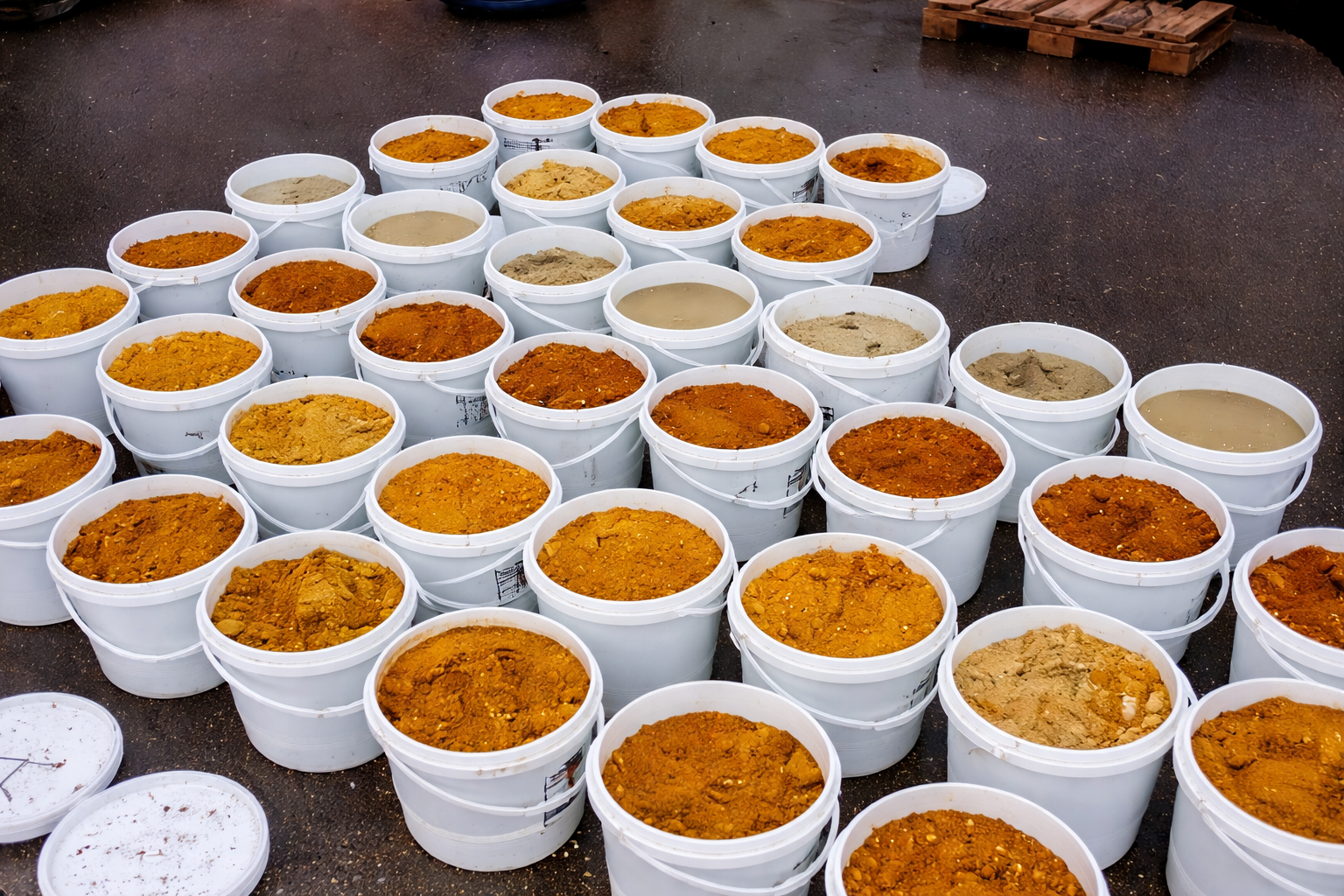
Classification is established through an analytical investigation of the excavated material. This involves sampling in accordance with LAGA PN 98, followed by analysis in an accredited laboratory.
Parameters tested include:
Only when the analytical results clearly confirm that Z1.2 threshold values have been exceeded is the material assigned to the Z2 category — with all the corresponding consequences for disposal and potential treatment.
Z2 material may not be directly reused on a construction site. Depending on the material's composition and pollutant profile, the following options exist:
At RMS Remake Soil GmbH, we advise you on which solution is appropriate for your specific material — and assess together with our laboratory partners whether technical and regulatory reuse is feasible.

The Z2 classification becomes relevant whenever you are working on previously contaminated or industrially used sites — for example:
RMS supports you with sampling, analysis and legally compliant classification — and where possible, with the economic recovery of your Z2 material.
A Z2 classification does not automatically mean the end of the material's useful life. With the right analysis, expert advice and modern treatment methods, even heavily contaminated material can be handled safely and in full regulatory compliance — and in many cases at least partially recovered, rather than disposed of at significant cost.
In our next article, we take a closer look at the new nationwide BM classification system — and explain how BM0, BM F1, BM F2 and BM F3 relate to the familiar Z-values.
We help you with classification, laboratory analysis and legally compliant disposal or recovery — professionally competent, reliable and sustainable.
We advise you personally and prepare an individual offer

René Radmacher, Managing Director